
 | Australian Petrol: Very ****ing Expensive (GetUp! does FuelWatch) | The Oil Drum: Australia/New Zealand | The Bullroarer - Friday 20th June 2008 |  |
ABC 7:30 Report: Richard Heinberg & Prime Minister Kevin Rudd
Posted by Phil Hart on June 19, 2008 - 6:00pm in The Oil Drum: Australia/New Zealand
It might be too little, too late, but this is some of the hardest hitting journalism we've seen on petrol prices. Kerry O'Brien at the ABC 7:30 Report is clearly no peak oil sceptic.
Monday night he put Kevin Rudd in the hot seat on petrol prices, and you got the impression that Kerry was not playing by the rules of engagement anymore. In that interview, he invoked Richard Heinberg, then on Thursday night he interviewed Heinberg himself.

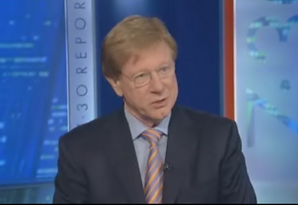
KERRY O'BRIEN, PRESENTER: Kevin Rudd, if we can start with oil. You and Brendan Nelson are both arguing over very small savings at the bowser, although his small savings are bigger than your small savings.
But isn't it time to look Australians in the eye and tell them the news is only going to get worse on oil?
KEVIN RUDD, PRIME MINISTER: Kerry, on global oil prices, no one that I can speak to, either within the Government, that is the Treasury who are looking at the long range forecasting here, or abroad, can give you any confidence about where global oil prices will be in three, six, nine, 12 months time.
[Maybe he should have asked somebody at The Oil Drum?]
So this is a massive shock to the global economy. It's happening across all economies at present. What we need to do is frame an intelligent, long term response to this, and Australia as of when we took over Government did not have a long term energy strategy, a fuel strategy.
[We need some really big binoculars.. see the GetUp! FuelWatch ad]
We're working on that, six months into office, and we hope to have something to produce later in the year on that score. Dealing with the long term channel, as well as being mindful of the impact on people's hip pocket now.
So, just in case we didn't get the message from Kerry's interview with Kevin, he interviewed Richard Heinberg (again). There is no attempt to pull the wool over our eyes here: Thursday Night: The end of the petroleum age
Contact
- anz at theoildrum dot com
License

This work is licensed under a Creative Commons Attribution-Share Alike 3.0 United States License.
Archives
- November 2010 (2)
- October 2010 (5)
- September 2010 (4)
- August 2010 (8)
- July 2010 (2)
- June 2010 (2)
- May 2010 (6)
- April 2010 (7)
- March 2010 (12)
- February 2010 (11)
- January 2010 (7)
- December 2009 (10)
- November 2009 (6)
- October 2009 (7)
- September 2009 (10)
- August 2009 (10)
- July 2009 (3)
- June 2009 (14)
- May 2009 (10)
- April 2009 (15)
- March 2009 (16)
- February 2009 (16)
- January 2009 (15)
- December 2008 (15)
- November 2008 (23)
- October 2008 (25)
- September 2008 (24)
- August 2008 (30)
- July 2008 (44)
- June 2008 (38)
- May 2008 (48)
- April 2008 (43)
- March 2008 (29)
- February 2008 (32)
- January 2008 (30)
- December 2007 (26)
- November 2007 (32)
- October 2007 (11)
Kerry O'Brien did indeed take off the gloves for a little while. I'm confused though, as to why he advocated reducing Excise. Still, it's probably the most blunt series of questions on the subject of Peak Oil that have ever asked of our politicans.
Tony Jones has previously interviewed Heinberg, now Kerry (The Red Menace :D ), and in last nights Q & A, the first questions were on Oil. It seems that the ABC 'gets it'. How long until Australias MSM latch on (even earlier this wek, Channel Nein!s 'reporters' were still harping on about 'speculation' driving Oil prices up)?
Yeah Red Kezza has gone all peak oil lately, so has Tony Jones, who also interviewed Heinberg recently and asked a question about "Hubbert's peak". Other closet peak oilers in the media include Alan Kohler and Robert Gottliebsen.
And Ross Gittins.
I think Kerry was actually trying to force Rudd to say that dropping excise is the wrong thing to do - he couldn't get the answer he wanted and almost stated it himself later in the interview:
The presenter is even more delusional than the PM. Why should the government reduce the excise tax???
technically its cutting paying gst on the excise (ie, a tax on a tax), and the goverment is talking about doing so because
a) they want to appear to be doing "something" about petrol prices (and they currently have budget surplus, although i think spending it on upgrading our train system would be a much better thing to do).
b) during and since the last election both parties have been saying they would (although the current opposition were talking about cutting the excise itself by 5c, rather than removing the gst on excise, which ammounts to about 3.5c).
Andrew
This is the first time on Australian television to my knowledge, that someone of Richard Heinberg's calibre has been interveiwed on a prime time current affairs programme.
Being aired on the Government owned television three days after the pathetic performance of PM Rudd on the subject, Richard was a breath of fresh air on the realities of the subject.
Heinberg was interviewed on Lateline just a few days before.
The ABC has been "switched on" with this issue for a while now... A quick search of the ABC web site will give you a number of hits.
Check out Crude.
I bought this at the ABC store and was disappointed to see that the extended interviews available for viewing for free on the web site are not available on the DVD.
Also, take a look at the 4 Corners production Peak Oil from way back in '06.
I could launch from here into an psycho-babble essay on the reasons why people keep plugging away with BAU but I'm sure that topic has been fairly well flogged to death already.
Regards
Mash
----------
Father, Farmer, Doomer, Engineer, Drummer
It seems to me that we are at PO now or have been there since 2005?
This should make the economic collapse that is anyway coming because of the worldwide creditbubble, to last the rest of ouer lifes.
The very odd thing, is that everything in the real life seems normal. Everybody drives in their cars as usual, and nobody talks about PO. The gasoline price has gone up, but hardly no one complains.
What is happening? Has the masses swallowed the blue pill, or have i been seduced by reading The Oildrum????
Confused.
That's because we can afford to pay much, much, more for fuel. I think OPEC realises this now.
Neo: "Hey"
Trinity: "What?"
Neo: "I used to eat there. Really good noodles."
Giddaye Swede (from France?),
Not seduced. I've been bitching and moaning to other Todsters for months that life as we know it can't possibly be coming to an end any time soon because no-one in MS (much less my immediate circle of family and friends) are talking about it. But clearly crude oil is finite and mankind collectively burns a heck of a lot of it each day - and this obviously can't go on forever. Whether we have a few years to get a plan up and running to slow or counter the problem, or a few decades seems to be the only debate. As a fence-sittle, each day my weight shifts toward the PO boat, though with the seemingly endless upward cost of essentials, "decades" is feeling a little slim.
I didn't vote for Mr Rudd, I'm a Peter Costello fan (ex-treasurer; had a quick chat with him once at the airport while we waited at baggage-claim; something we can still do in Australia, btw). Peter is one of the few politicians who speaks that I don't reach for the remote. But whether he would waffle as much as the current PM in today's environment is unclear to me.
At the end of the day though, we need the PO experts appearing on prime-time MS news and current affairs, not waffle-talk polys - I would think less than 2% of the country saw this interview with the PM; probably half of those switching off as the waffle kicked in (in their minds at least). And these experts need to spell out the plain facts in simple terms. Having said that, the sixty minutes report the other night let the site manager at a Canadian tar-field get away with proclaiming 60mbpd was possible and a 40 year supply; as well as no mention of the energy return on the energy invested equation.
As long as Joes and Janes like myself are left in the MS dark, or worse told "she'll be right, mate!", if and when PO finally bites (in a big way, that is - like Qantas folding?), I fear not many of us will handle it well at all. Indeed, I still wrestle with it myself.
Regards, Matt B
Matt B,
I've been following your posts with some interest--nice to get your perspective.
Keep this reality in mind about Peak Oil:
Right now, even if peak is currently underway, humanity is producing and utilizing more energy than ever before in the entire history of the species. With so much energy being used, much can and is happening. The "world" is going zoooom as never before.
Such is the reality of life at Hubbert's peak: The shock of energy scarcity "sneaks" up at a time when there's so much abundance. Life goes on pretty much normally and then the oil-production downturn arrives. Like a storm arriving in the night, Peak Oil engulfs the unaware. The late Bakhtiari's "four transitions" outline this concept pretty well. The first one, right at peak, is the most like BAU. After that, the world as we know it is expected to change in a myraid unexpected ways. All in a matter of years (approximately 3-4 years per transition by Bakhtiari's estimation).
To anthropomorphize, Peak Oil by its nature is most deceptive.
-best,
Wolf in YVR BC
Thanks Wolf, I appreciate it (indeed, have always been very grateful in the level of detail in the replies as I fumble my way through this!).
Your storm-engulfing-the-unaware analogy is fantasic! Never thought of it like that. Guess I need to start finding the ropes to tie everything down (convincing the wife still remains the problem however, though not in a tying down sense)...
Regards, Matt B
Too much information there Matt!
Oops, sorry. That would be "Evil Matt" speaking (out of context) - happens occasionally, like building up browny points with the mother-in-law, only to say or do something stupid to lose them all. Will I ever learn!
But you do know I'm kidding, right?
Regards, Matt B
Hi Matt,
Things still seem normal here in Oz where the median family still only spends 5% of their income on liquid fuels, plus a few more percent embedded in food and consumer products. We can probably absorb another doubling in fuel prices without much sweat (say two years) and possibly even another doubling after that...
But things are not so relaxed in the third world, where the household budget numbers already don't add up, and that's just for some kero to cook dinner for your kids...
http://english.aljazeera.net/news/asia/2008/06/2008619121558798802.html
(And dang, the nearest firewood's three days' walk away, thousands of metres up the side of a mountain!)
Exactly. Hence the word "peak". There's an aviation analogy that I think is appropriate. The angle of attack at which a wing produces maximum lift is called the critical angle of attack. What happens as you continue past this angle? The wing stalls, rapidly producing less and less lift. The airplane loses altitude. Recovery prior to hitting the ground depends on application of the proper recovery techniques, and how far above the ground you were when the stall occurred.
No sane pilot flies with the wing near the stall without taking corrective action or at least being hyper-vigilant.
What do you think, nice analogy? It seems counter-intuitive, at first anyway, to think of being in big trouble when you're at "the max". I know I was surprised to hear this when I first learned it in ground school. (Coincidentally, at YVR).
Hi Just,
Yes, this is a nice analogy.
Hello from crop dusting South of USA.
Just lost a pilot to exactly this Stall earlier this month.
My Bro in Law says Cessna even did a film on it.
My Bro in Law, a crop duster, said the pilot was too young, 24,
too cocky, we'll make a ton of $$$, and owner had said pilot
doing low level spraying, too much,instead of fertilizing.
From Sweden actually.
I know, just kidding.
Its around the edges. Traffic in Los Angeles has slowed down. More people in the 99 cent stores. Airplane travel is now downgraded - if you could afford Paris then you may settle for New York.
The size of food packages is smaller - smart cars and bikes of all type are in the hood.
I just got a notice from the DWP that my electric rates will go up.
bit by bit
And water rates here in Melbourne, Oz - up by 15% on July 1st to pay for the $5billion desal plant.
Water's still stupidly cheap.
For Block 1 pricing, it's $1.58/klt for supply and sewage. That's $1.58 per tonne. So even if you are the average wasteful Aussie household with 640lt/day of use, that's a buck a day. Half a Mars bar.
Might be a bit more, the rate goes up after 22,440lt use over the billing period of 60 days, but I wouldn't know those rates since I've never used that much (374lt/day).
You'd have to really be pissing it away at a ridiculous rate for the price to hurt you. A burger would get you three thousands litres.
And what's the rise going to be? 14.8%, says news.com.au. Big deal, 15 cents a day, a buck a week. That's less than the difference between filling your small car's fuel tank on Monday and filling it on Friday.
Aussies accuse Poms of being whingers, and yet we're complaining about an extra 24 cents for a TONNE of water.
Not that the desalination plant is a good idea, of course. It'll be powered by... electricity from coal and hydro, both using heaps of water. Brilliant! We just need to get onto those idiot farmers growing rice in the Mallee and stuff like that.
Don't blame the rice growers. This years rice prodn will be about 50,000 tons compared to million plus in "normal" years. Possibly will never see normal years again as even if the drought breaks the dams will take a few years to fill.
The supermarket shelves now mostly have imported rice and my local (ALDI) only has imported rice.
Not this year, no, but that's because of the damage done in previous years.
Because they grew 1,000,000 tonnes in previous years, they can only grow 50,000 tonnes now.
Water's like a bank account gathering interest. If you draw on the interest, you get interest again next year. If you draw on the principal, you get less next year, and less, and... "Oh no, however did I become broke? Someone help me!"
Professor David Paton from Adelaide University, who has studied the decline of bird life in the lower reaches of the River Murray, now says the Mount Lofty Ranges region is showing similar problems.
He says 10 bird species have become extinct and another 60 or so are on the brink.
"There's a real risk that you'll lose half the bird species from this region. I think that's something should no longer be tolerated by any society," he said.
"This generation of South Australians can make a difference we can try and stop those losses.
"But if we leave it too late then, just like the river collapsing, the natural systems around us will collapse."
---------------
A further report due in three years will analyse trends in the river system during drought.
Only a day earlier, a leaked report warned there were only months left to save some parts of the Murray-Darling system.
I guess we can forget about that "further report" then. eh?
http://www.abc.net.au/news/stories/2008/06/19/2279525.htm
http://www.abc.net.au/news/stories/2008/06/18/2277949.htm
I like the idea of using seawater to power the desal...
http://www.ceto.com.au/about/freshwater-and-ceto.php
OK, OK. I get the point. And fair enough. I wasn't complaining though, just pointing it out.
Regards, Matt B
PS. Aren't we supposed to be rating these comments?
Maybe it's half good, half bad ratings :)
Or maybe nobody is bothering because it's pointless.
and to pay for the north south pipeline to steal the water from the Goulburn Valley.
In the United States people complain. They complain about the greed of the oil companies and OPEC, and they complain about environmentalists protecting oil off-shore and in Alaska. There are even some who are furious at the current US regime due to statements made by some "former Alaskan oil pipeline chaplain" about how Alaska has enough oil for the US for "200 years".
"Peak oil is a misnomer. It is an idea perpetrated by the powers that be for the purpose of deceiving the public".
http://www.youtube.com/watch?v=NbakN7SLdbk
Exactly. We'll look back on $100 per barrel and marvel at how cheap it was.
It's a different story for people who make $1500 per year, obviously. But in a country like Australia we could keep essential services going at $1000 per barrel (the economy would be in a depression, obviously).
I know, sounds daft, but do a thought experiment:
Suppose oil is $1000 per barrel, and petrol has gone up to $10 per litre.
Imagine you drive 20,000km per year, mostly commuting to work.
Your car gets 10km per litre. You buy 2000 litres of petrol per year.
At $10 per litre, this costs $20k per year. Impossible, right?
Well suppose you log onto a carpool web site and find 2 other people to share the ride with. They live near you, they drive to your house, you all chip in for petrol, you drive your 30km into work and drop them off. Your share of the fuel bill is $7000 per year.
Would you give up you job and resign yourself to a life of poverty over a $7000 p/a fuel bill? I think not.
And if you know a guy with a van, you might get your bill down to $3000 per year.
Obviously the food in the supermarket is far more expensive. Obviously nobody is buying widescreen TVs any more (unless you work for BP). Obviously the economy sucks. And I'd hate to think what life is like in Africa.
But people can still get to work in Sydney at $10 per litre. $1000 oil.
Now if it takes $1000 oil to get people to carpool...then that is what will happen.
(Edit: whoops, meant to post further up in response to quoted comment)
Frankly as a tighht a$$ed bugger I would walk to the car pool or walk/bike to work. At that fuel price and resultant depression there won't be any overtime (probably no job as well) for a big proportion of the population and the people in the outer suburbs will be the biggest victims.
If the economy's in a depression then you're not that likely to have a job to go to.
Anyway, to me the question isn't what level of pain car drivers could afford, but the cost at which oil-based large scale monocrop farming becomes uneconomical. Many Australian farmers are already pushing the limits of available credit to plant each year's crops, and each year where the crops fail sees more & more of them leaving the land.
When the price of oil increases, planting, fertilizing and harvesting will all get more expensive & this would see an accelerating number of farmers throwing in the towel. This means less and less food is produced, in a country where the big cities are a long long way from food growing areas. Is it just me, or does anyone else see a problem with that?
As we speak Resources Minister Ferguson is winging his way to Saudi Arabia to do Rudd's bidding, namely to 'put a blowtorch to OPEC'. That should sort things out.
A recurring thread among TOD ANZ posters was that Australia should use its ample gas reserves (albeit accident prone) as a major replacement for imported oil. The government seems to have taken not one whit of notice. We must keenly await this weekend's breakthrough.
Actually to Marn's credit he has been talking about GTL recently, but less so about CNG, which is infinitely more sensible. But hey, this is Marn we're talking about.
maybe someone has whispered in his ear that CNG is not as problem free as first thought. I ahve recently investigated converting my car to CNG and it is currently virtually impossible in Australia to do it at anything like a sensible economic price. Each engine type needs to be tested and approved before doing it so only the big car manufacturers are really in a position to do the R&D and investment in this and I'd be really surpirsed if they haven't done some.
The fact that CNG is not even rolling out as an option indicates that there is market resistance to the limitations of CNG and therfore not worth rolling out. When the market resistance to only 100kms for each "charge" of gas dissipates, then they will roll them out. The problem may be that by then the economy has tanked so much that the new car market may have shrunk to a point where it just isn't viable to produce cars in such small volumes regardless of waht fuel thay can run on.
I think CNG makes more sense for large vehicles - convert buses and trucks to use it rather than regular commuter cars.
There is also the problem of most of the (currently known) gas being on the west coast, not piped to where all the cars are.
From that point of view GTL makes sense, although we'll be a little more exposed to international market prices than we might be for CNG.
I suspect that Martin does, or is starting to "get it" as well, based on some of his choice of language.
Yesterday he was basically saying that it was supply and demand fundamentals and didn't have anything to do with speculation. He sounded worried.
Boof, what are you smoking? there has never been a gas related accident in Australia, not in WA and especially not in Melbourne, and even if an accident ever occurred the govt will fix it all hunky dory in a day or two.
(I guess it pays to have a solar HWS and a generator when that day or two becomes months).
Surely using a blowtorch just uses up another finite resource?????
Well they are used to the heat over there so I think we should have packed Marn the cricket bat instead!
Perhaps Marn should shout them all a nice Aussie dinner and then explain to them the concept of Peak Lamb.
Somehow Dragondonk, I dont think that would help much, When Kuwait peaked a few years ago and went into a sharp decline, (domestically) that would have been a big enough wake up call for them all. Maybe the dust is settling and they are actually going there to hear the "Awful Truth" That being those state secrets, and how they have all been propping each other up secretly, and that the only friendly country left that has any oil of volume is Saudi Arabia, and They have also tanked, Things could be much worse than we ever thought, and given the way our Leaders have acted thus far, if they start talking about PO now, should we apply a factor of 10˚ to the alerty level? I think what we will see if if things are not as bad as I mentioned above will be, individual deals done with each country, and that will mean by default, dumping the US$ Perhaps Mr Rudd should have learnt to speak Farsi, rather than Mandarin, this could be the final bell for the USA. we will need to watch this very carfully to decipher what is really happening from what is said in the media, It will be interesting to watch how the Associated opress dodge and weave there way through this one, reading between the lines will be the key.
It's running on pre-heated air, captured from the Lower House the last few weeks. Should be good for a 30% efficiency improvement. ;)
Last night was the first time my family actually sat down and listened to a conversation about our oil dilemmas. Until now they have only had me to relay information, which they take on board in small amounts. It's funny after listening to Heinberg speak my father actually said "So 'The Party's Over' then".
My folks are pretty smart people but what I think a lot of others need is a talking head on the tele to make them listen. We need to have people like Heinberg on shows like Sunrise and Today.
The average punter has NO IDEA about the problems we face. As long as commercial television leads it's news shows with stories about Britney Spears' latest mishap then we have little hope of facing the situation head on. Perhaps we need a series of ads with Joanna Griggs slowly easing us into the realities of having less energy, like the water ads.
On another note there was a short interview with NRMA head Alan Evans on the ABC's midday report yesterday. It was the first time I actually heard him say that people need to start driving their cars less and use public transport, this from the boss of a motoring association.
The dithering is slowly coming to an end. Our decision makers are slowly learning the realities of the world. I just hope it's not all too late.
There is a huge amount of analysis that is undertaken on TOD. It's very interesting and helps expand knowledge, but I do not need to know half of it. There was enough information on peak oil available 5 years ago for a solid opinion to be formed. A quick glance at the peak discoveries chart compared to what we use today, then factor in growth of the third world, aging oil fields and it is obvious peak oil is not science fiction.
Just a matter of when. I think we'll know that when the fuel price stops rising and starts to fall. Could be 1,2 or 3 years, but I expect the price to double and then drop back to maybe even below what it is today, in the long term fuel at 50% higher prices than today is what I expect. That's when we will be looking at peak oil in the rear vision mirror so there can be no doubt.
With all you have read here at TOD I am surprised you can make such a statement. For example the work of Westexes (ELM) points to NET exports from KSA the key swing state trending to zero just after 2030. How can a commodity that is vital to the world economy and is trending to zero supply be just 50% higher long term?
IMO we will see step increases to astronomical 'society' killing levels very very quickly. Anyone who is unprepared for these step changes is going to suffer. If we are to survive, if this is indeed a decades long 'transition' phase then I think it will be 5-10 times worse than the social disruptions felt in the 70s. It will be called the 2nd Great Depression. But I am an optimist, eventually the demand destruction, economisation, energy substitution and societal reforms will prevail and sometime in the 2030s we will start to see light at the end of what will have been a long dark tunnel.
Nick.
Agree completely. Is it time to start bombarding the MS TV and radio stations with simple emails? Or is it up to someone else?
Regards, Matt B
One foot now firmly on the PO boat
No, it's up to us I'm afraid.;)
I'm generally sanguine now about how pathetic the political preparedness for PO has been but I got really angry when Rudd trotted out this line:
It is simply astonishing that a Prime Minister, however long he's been in office, can say that long term energy security is of such minor consequence that it could be ignored completley in opposition. I emailed Rudd and Garrett and Conroy (I think), who was then opposition energy spokesman, prior to the election, with my concerns about PO. Not one of their offices even had the courtesy to acknowledge recieveing it. So for Rudd to now say that all this is a complete shock and nobody can see oil prices into the future is just unbelievable.
Peter Costelllo made some very salient but guarded comments about oil prices in the dying days of the campaign. He knew. We knew , why didn't anyone in the ALP have any clue. Rudds entire governemnt is now looking like it will be completley ambushed by an external factor that they have not prepared for, just like GWB who was elected on his domestic agenda, but spent his whole presidency reacting to the terrorist threat.
Worse still is the hypocrisy. Recall all the backslapping and high fives after the Bali climate conference when the Kyoto sign-on was announced. Since then the Rudd guvmint has slapped a means test on solar rebates and approved new coal facilities. While this mainly concerns climate mitigation rather than liquid fuels it should all tie in with a master plan if they had one.
When Marn applies the blowtorch to OPEC this weekend I hope someone says 'You've got gas, you've got uranium. You figure it out.'
The Sauds also keep their oil in the desert and we have plenty of desert therfore we should also have plenty of oil! Problem solved. Someone tell Marn to come home and start drilling!
By the way, Rudd adjusting his glasses like that? That's his tell. He always does that when he's being challenge to provide something concrete, he never does it when he's giving warm fuzzies.
So if you ever play poker with him, you know what to look out for ;)
I couldn't help but notice that in the first question his lip twitches when it's suggested that 'the news will only get worse on oil'.
Seriously though, thanks a lot for posting this. I'd love to see an interview like this with our government in Canada.
I give credit to Richard Heinberg for mentioning population, or rather, over-population as being a problem in his book ("population overshoot"), and the need to reduce it. However, he failed to mention it here in a report to a country full of people whose leaders are currently embracing population growth as a positive activity. So I would click the down arrow for Richard's comments in this venue. The leaders of countries like Australia and the United States (and large amounts of their citizens) embracing and saluting population growth via immigration is a horrible and alarming advertisement that they do not have a clue that there is even a problem. "Growth is good!".
One step at a time....
Population growth *via immigration* is surely not a problem, particularly if you're importing energy-profligate Americans from the frozen North and keeping them in the more civilised climate of Canberra.
Well that's not what you are doing. From Wikipedia:
"During 2004-05, a total of 123,424 people immigrated to Australia. Of them, 17,736 were from Africa, 54,804 from Asia, 21,131 from Oceania, 18,220 from United Kingdom, 1,506 from South America, and 2,369 from Eastern Europe.[4]"
And your government is intent on increasing your immigration.
If they come over with enough coal, oil and natural gas for themselves and all their descendants for 100 years - or if they bring along the capital (and pass it to the government) for their (and their descendents for 100 years)share of a nuclear reactor; then, in either of those two cases, I would agree 110% with you that population growth via immigration is surely not a problem. Of course I didn't mention food and fresh water or any other raw materials, since those will never be a problem with respect to population growth.
They don't need to bring their own coal... we've got ships queued at Newcastle.
Yes, population growth is a problem... but does that mean immigration is a problem? Maybe, to a nationalist.
What happens when the sea level rises?
What happens when crops fail?
What happens if there is war?
Are you saying that people can't immigrate to avoid this? Or in anticipation of this? That it was all there own fault so we should shut the gate before it's too late and leave the immigrants to their fate?
Many of the African immigrants are refugees.
In the figures above, Oceania would refer to New Zealand... that doesn't really count as immigration... more like translocation. They coulda just joined us at Federation ;-)
The Brits? Well it is a non discriminatory policy ;-) ;-) (they say)
And the Eastern Europeans are probably mostly brides.
Talk about the "baby bonus" if you are worried about population growth.
But population is not the only factor in the IPAT equation.
When 5% of the population consumes 20% of the worlds resources, and 50% of its oil, located in one country... you tell me.
In any case, why is a non resident worried about the immigration policies of us Aussies? You want to be careful with that no immigrant policy advocacy, what if it goes tits up in your country? Where you gunna run to?
"When 5% of the population consumes 20% of the worlds resources, and 50% of its oil, located in one country... you tell me.
If one country is consuming that much I call for that country to stop immigration. :)
"In any case, why is a non resident worried about the immigration policies of us Aussies? You want to be careful with that no immigrant policy advocacy, what if it goes tits up in your country? Where you gunna run to?"
For all the romantic notions surrounding immigration, it is only a trickle relative to the world's population - enough to slowly make things worse in Australia and the United States and other countries that practice it - but not enough that it comes close to helping the vast majority of the world's billions flee their less wealthy or overcrowded homelands. It exists to help enrich the pockets of real estate developers and their friends in government, and to make hiring easier for business people. I couldn't run anywhere if things went "tits up". I would be in line with billions of people hoping to be one of the 200 thousand you guys chose each year.
Anyone got a video of this?
I'm watching the Heinberg video right now. There were some video links on the right side of the TV pages, linked to in the post.
I wish American interviewers were 1/10th as tough on our top politicans as that Australian one is. For starters I like the way he addressed him by his name and not "Mr. Prime Minister". But he did whiff on one followup. When Rudd said that no one one can tell him where the price of oil will be in 3, 6, 9, 12 months time - he should have asked "where will it be in 10 years?".
People just fell all over themselves trying to outdo each other in praise of the deceased Tim Russert, and yet it came out in court testimony that the Prince of Darkness, Dick Cheney wanted to specifically go on Russert's show to do his damage control and propagandizing because that was where he could "control the message". And Russert was the one who got the Whitehouse Oval Office interview with Bush. Great "journalist" or political shill?
Thanks for that compliment FiniteQuantity, The ABC.au is part of the organized media, (Commercial Media, Organized Media, Independent Media) the thing that Ronald Reagan destroyed in the US all those years ago, so I would not hold your breath waiting for AP to do an article like this, what I can say is that, the question has been asked of Australia, Are we past Peak Stupidity" Hopefully this will follow Hubbard's curve too ;)
Dush,
take a look at my comment near the top of this thread for links.
Mash
Richard mentioned that there is currently some oil that is only being produced because of the high prices. Does anyone know of some links to substantiate the statement? It sounds about right but many people demand some proof of such claims.